Showing posts with label La Bête Blooms. Show all posts

Wednesday, 11 May 2016

La Bête Blooms Bass Recording Techniques

As previously stated, the bass guitar was originally recorded directly through a Sansamp bass driver DI. The intention of this was to A; create a ghost track and B; ensure the performance of the drummer seemed as natural as possible, essentially guiding the drummers performance.

It was agreed that the bass would be re-recorded as the Sansamp added too much colouration to the D.I. signal.

I again referred to the techniques employed by Steve Albini (Tingen, 2005) to inform my microphone choices when recording bass guitar.

Albini states that his preferred microphone choices for recording bass are;


  • EV RE20
  • Josephson C42
  • Audio-Technica Pro 37R
  • AKG 451
  • Altec 165/175
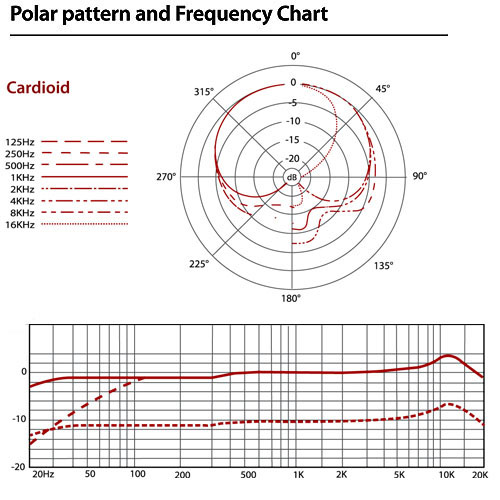
Out of the above choices, the only two microphones currently available to me are the EV RE20 and the AKG 451. It is evident why both of the microphones are particularly effective when recording the bass guitar when one again refers to their frequency responses. 

EV RE20 (Electro Voice, 2016) 


AKG c451 (AKG, 2016) 


When placed at 0 degrees to the sound source, the EV RE20 has a very balanced low end response from 70-150 Hz, ideal for recording the fundamental frequencies omitted by the bass guitar. The high end response is especially uneven in comparison, this is where the AKG c451 is of particular use, the mid and high end is much more balanced, with a smooth curve and boost beginning at 5kHz and rolling off around 15kHz. This will allow the AKG c451 to pick up the finer details such as string noise/rattle adding more depth to the overall sound of the bass guitar.   


La Bête Blooms Guitar Microphone techniques


When it came to recording guitar and bass for La Bête Blooms, I again referred to the techniques employed by Steve Albini (Tingen, 2005) to inform my microphone choices.

When recording guitars, I selected three differing types of microphones. One ribbon mic, one large diaphragm condenser and one dynamic. Steve Albini lists several of his favourite microphone choices for recording guitars. He firstly recommends the Coles 4038, as well as the Royer 44/77. Both of the aforementioned microphones are ribbon microphones. I had originally intended to use the Coles 4038  for this purpose, as at the college we don't have access to the Royer 44/77. However the Coles was in use when I had scheduled the guitar recording session to take place.

I did however have an alternative ribbon microphone available to me in the form of a Beyerdynamic M160.

The technical specifications and frequency responses for each microphone can be viewed below;

Coles 4038 (Coles Electroacoustics, 2015).


Beyerdynamic M160 (Beyerdynamic, 2016)


When examining the frequency responses of each microphone it is evident there are some distinct differences. Firstly, the low end see's a considerable boost on the Beyerdynamic. It is important to consider this factor in the mixing process, as this will have to be rectified using EQs to introduce a high pass filter, cutting the boosts to the low range frequencies. There are however similarities when examining the high range frequencies. There is a boost around 3-4kHz on both microphones as well as a roll off around 8kHz. I believe that the M160 would be a suitable replacement for the Coles in this instance, as long as these factors are taken into consideration during the mix down.

Steve Albini also references the Neumann U67, a large diaphragm condenser microphone. I also don't have access to the Neumann U67, however it appears to be a similar microphone to the SE 2200T as both microphones also seem to have a relatively similar frequency response when referring to the cardioid polar pattern on the Neumann U67.

The Frequency responses for both microphones can be viewed below;

Neumann U67 (Coutant, 2000)
Frequency response

SE 2200T (Scan Computers International Ltd. 2016)


 Images of Microphone placements:


Tuesday, 17 November 2015

La Bête Blooms Guitar Recording Techniques

In my initial meet with La Bête Blooms, they made clear that the main focus of the recordings would be the 'Wall of Sound' type approach to recording guitars. Almost as if the guitars were the main focus rather than the vocals in most popular music.

When conducting my initial research I discovered an article on Butch Vig (Buskin, 1997) and Nevermind. The article briefly mentions 'Wall of Sound' in relation to experimentation and multi-layering.


All this improvisational trial-and-error multi-layering could be said to amount to a latter-day 'wall of sound'. Vig agrees: "Kind of! I mean, a lot of the bands that we listen to and who we love are doing very similar things: Tricky, Massive Attack, Björk...(Vig cited in Buskin, 1997)  


Upon further researching I discovered Phil Spector, the pioneer of the wall of sound technique. I gained a basic understanding of what the Wall of Sound technique entails at the following link by reading a blog post by Hollis (2010). He states; 


 Phil Spector is famous for the ‘Wall of Sound’, He created this sound by having a number of instruments or vocalists perform the same parts in unison, then he would record the sound using an echo chamber. Some tracks were doubled or tripled to make songs sound fuller.'  Hollis (2010)


Taking this into consideration, I don't have access to an echo chamber, however I do have the ability to record and multi-layer guitar takes playing the same parts in order to create a dense, full sound much like the original Wall of Sound technique pioneered by Phil Spector.   

La Bête Blooms Drum Microphone Techniques (Toms & Overheads)

Again, referring to Tingen (2005). I decided to examine Albini'sfavourite microphone for recording toms. The microphone listed is the E22s (Josephson Engineering Inc., 2014) available at http://www.josephson.com/srs6.html . It is a side-address condenser microphone and I don't believe I have access to anything that would remotely resemble this microphone.

I decided to look into what microphone choices other producers I have mentioned use. According to Buskin (2000) Glen Kolotkin uses Sennheiser MD421s (Sennheiser, 2016) on toms, I decided to research the microphone and see if it may be a suitable substitute.

After examining both frequency response charts, the response seems to be largely similar until roughly 1.7kHz where it is quite heavily pronounced on the MD421. I feel that this can be corrected with an EQ by cutting problem frequencies due to the limited options available to me.

Steve Albini states one of his favourite choices overhead microphones are the Coles 4038s (Coles Electroacoustics, 2015). I have access to one Coles, so it wont be possible to use this microphone for an overhead as I would need a pair.

I again re-visited the article regarding Glen Kolotkin (Buskin, 2000). He used a pair of AKG C414s (AKG, 2016) to record overheads. I also examined the frequency responses of these microphones against one another. I found that they were both quite similar, however the Coles roles off around 6kHz. This could be replicated by rolling off the high end slightly using an EQ to try and re-create the sound a pair of Coles microphones may offer.


La Bête Blooms Drum Microphone Techniques (Snare)

According to Tingen (2005) Steve Albini's favourite snare microphones are listed as;

  • Altec 175 (top)
  • Sony C37p (top) 
  • Shure SM98 (bottom)
  • Altec 165/175 (bottom) 
It also states that he only occasionally mikes the bottom of the snare, so my main focus will be on my microphone choices and placement for the top. Neither the Altec 175 or Sony C37p are available choices to me, so I felt it was necessary to review the choices that are available, as well as informing choices based on the choices of the aforementioned producers Tony Visconti and Glen Kolotkin. 

I found the following source http://www.coutant.org/sonyc37p/ (Coutant, 2000) with information regarding the Sony C-37P with useful specs such as the frequency response and polar pattern information. Based on appearance alone, I decided to compare this microphone to the AKG C3000 AKG C3000, a large diaphragm condenser microphone available to me at the college by reviewing the following source http://www.akg.com/pro/p/c3000-b (AKG, 2016) . Below are images of the two microphones frequency responses.

Sony C37P 


AKG C3000B

The Sony C37P has a relatively flat frequency response which tails off towards the high end at around 4kHz when placed at 90 degrees. The AKG C3000b however has a slight dip around 2kHz but promotes high end frequencies around 5kHz. This may be an issue as a lot of important frequencies given off by the snare occupy the high-mid range where there is a slight dip.

I recall in Stackpole (2013) that Steve Albini sometimes uses two microphones when recording the tops of the snare drum, one dynamic and one condenser. After taking this into consideration I wondered If I could perhaps use a dynamic microphone to make up for what is lost in the frequency spectrum when recording with the AKG C3000B.

Referring back to Senior (2008) and Buskin (2003) as well as my own empirical knowledge I have decided that I will use the Shure SM57 to record the top of the snare as well as the AKG C3000B. Below I have included the frequency response chart for the SM57, which has a flat frequency response around 1kHz-2kHz, much like the Sony C37P, making up for the frequencies lost by using the AKG C3000B.   


La Bête Blooms Drum Microphone Techniques (Kick)

As for recording drums, I have based my techniques on the practices of Steve Albini. In order to do this, I have decided that it will be beneficial to research what microphones he uses, as well as any specific techniques and try to faithfully recreate the techniques using microphones available to me at Hull College.

In the aforementioned Sound on Sound  article (Tingen, 2005) is a brief run-down of his favourite drum microphones. I have also found the following article (Stackpole, 2013) which briefly discusses some of the approaches he takes to drum recording; http://www.drummagazine.com/plugged-in/post/studio-tip-drum-miking-top-to-bottom/ 

In the Sound on Sound microphone breakdown, his favourite kick drum microphones are listed as the AKG D112, EV RE20 and the Beyer M380. Out of these three choices I have either the AKG D112 or the EV RE20 available to me. I have used the D112 numerous times on a kick drum so I decided to research the EV RE20s applications when recording the kick drum, which lead me to another useful Sound on Sound article (Senior, 2008) on Kick and Snare drum recording http://www.soundonsound.com/sos/jun08/articles/kickandsnare.htm.

After reading the article, it is evident the EV RE20 has been used by several producers such as Glen Kolotkin according to Buskin (2000) http://www.soundonsound.com/sos/jun00/articles/glen.htm  (section 'Mic Matters' paragraph two), and Jim Scott, according to Tingen (1999) http://www.soundonsound.com/sos/dec99/articles/jim.htm (section 'Get it Whilst it's Hot' paragraph two) as a kick drum microphone. Senior (2008) also suggests that some producers opt for using a combination of the EV RE20 and AKG D112 when recording kick drums as the RE-20. Tony Visconti used this technique on the recording of David Bowie's 'Reality' according to Buskin (2003) http://www.soundonsound.com/sos/oct03/articles/reality.htm. He states;

There was a D12 on the kick, together with an RE20 placed just inside the skin near the beater for more attack, and I routed both of these to one channel and mixed them together... I hate microphone stands because they just get in the way and reflect sound, and so I try to avoid them as much as possible. In fact, I even put the D12 inside the kick, resting on a pillow, whereas I did have to put the RE20 on a stand so that I could aim it directly at the beater. Visconti Cited in Buskin (2003)

Based on this research, I will mike up the kick drum using both the D112 and the RE20. As both the microphones are favoured by Steve Albini and have been used together by producers such as Tony Visconti to capture both the low end and the attack of the beater of the bass drum.     


La Bête Blooms Drums and Bass Recording Approach

My practices carried out whilst recording La Bête Blooms will be informed by the practices of both Steve Albini, and Butch Vig.

Both engineers prefer to take a live approach to recording, However I feel that it would be quite difficult to minimise bleed/spill from individual microphones given the size of the college studio. 

In the aforementioned article regarding Steve Albini, he states; 

I prefer to record as much of the band in one live take as possible. If you do it any other way, the band is forced into an unnatural situation from the very beginning of the process. They play together in the rehearsal room and on stage, so it seems normal to me that they also play together when they come into the studio. With 90 percent of the records I do, the singing is recorded after the band, unless the singing is what leads the band (Tingen, 2005) 

Taking this into consideration, I have decided to take a live approach when recording bass and drums, recording both together to a click track with the drummer in the live room, and the bass player in the control room running through a Sansamp straight into the desk as a ghost track. The remaining elements such as the bass, guitar and vocals will be overdubbed using a multi-track approach to achieve more flexibility with the overall sound.    

Monday, 16 November 2015

La Bête Blooms Producer Research

After the first meeting with La Bête Blooms it was clear that I should begin my research by exploring practices used by producers, and practices used on landmark recordings in the aforementioned post.

Firstly I decided to research Steve Albini, famous for his work with grunge artists such as Nirvana and The Pixies.

My research lead me to a soundonsound article (Tingen, 2005)  on the producer which can be viewed on the link below;

http://www.soundonsound.com/sos/sep05/articles/albini.htm

It was particularly interesting to discover his view on the engineer/producer-artist relationship and how he feels about putting the artists interests before anything else. He is 'averse' to the role of the record producer and sees his work as 'purely technical, rather than artistic'.

I feel that I will adopt this approach during the process, however I have been informed that two of the tracks that I will be recording for La Bête Blooms are new tracks, I will offer suggestions If I feel certain elements of the tracks don't work or would work particularly well in a different way.

The article features a synopsis of his favourite microphones in different applications, I found this particularly useful when trying to inform my own choices as regards microphone choices in the recording process.

I also decided to research other producers who may inform my practices when recording La Bête Blooms. I decided to take a look at producers who worked with Nirvana on their other records. Nevermind, arguably one of their most commercially successful records was produced by Butch Vig.

I also discovered an article (Buskin, 1997) about Butch Vig and working on Nevermind which can be viewed below

http://www.soundonsound.com/sos/1997_articles/mar97/butchvig.html

Saturday, 14 November 2015

Initial Meeting with La Bête Blooms

For my recording portfolio I have decided to work with La Bête Blooms, a band whom I have previously worked with. I aim to record, engineer and produce an accurate representation of the artists sound through appropriate production techniques based on the artist’s direct influences.

The first step involved arranging a meeting between myself and the band to discuss initial considerations of the recording process. I first discussed what approaches the band have usually taken when working with other producers and which approaches they are most comfortable with as artists in order to get what I believe would be the best from them as performers.

 They informed me that they usually begin by recording bass and drums together to a click track and then follow suit in a typical multi-track recording manner, adding guitars, followed by vocals and any extra instrumentation. 

I followed this by asking key questions which may help me pin-point my research focus for this project. Firstly, I asked what key genres they would associate themselves with as an artist. They responded with;

‘Shoegaze, Grunge, Indie and Post-Punk’ 

I also asked which artists they consider influences on their sound, they replied with; 

'My Bloody Valentine, Pixies and Nirvana' 

I also asked if there are any producers the band were particularly fond of. Jack, the bass player informed me that they particularly admired Steve Albini who produced In Utero, by Nirvana.

The band also informed me that the main focus of their sound would be their 'wall of guitars' otherwise known as a 'Wall of Sound'.

I believe the following information has given me enough information to form a valid research focus to inform the practices I wish to employ during the recording, mixing and mastering process.