When it came to recording guitar and bass for La Bête Blooms, I again referred to the techniques employed by Steve Albini (Tingen, 2005) to inform my microphone choices.
When recording guitars, I selected three differing types of microphones. One ribbon mic, one large diaphragm condenser and one dynamic. Steve Albini lists several of his favourite microphone choices for recording guitars. He firstly recommends the Coles 4038, as well as the Royer 44/77. Both of the aforementioned microphones are ribbon microphones. I had originally intended to use the Coles 4038 for this purpose, as at the college we don't have access to the Royer 44/77. However the Coles was in use when I had scheduled the guitar recording session to take place.
I did however have an alternative ribbon microphone available to me in the form of a Beyerdynamic M160.
The technical specifications and frequency responses for each microphone can be viewed below;
Coles 4038 (Coles Electroacoustics, 2015).

Beyerdynamic M160 (Beyerdynamic, 2016)

When examining the frequency responses of each microphone it is evident there are some distinct differences. Firstly, the low end see's a considerable boost on the Beyerdynamic. It is important to consider this factor in the mixing process, as this will have to be rectified using EQs to introduce a high pass filter, cutting the boosts to the low range frequencies. There are however similarities when examining the high range frequencies. There is a boost around 3-4kHz on both microphones as well as a roll off around 8kHz. I believe that the M160 would be a suitable replacement for the Coles in this instance, as long as these factors are taken into consideration during the mix down.
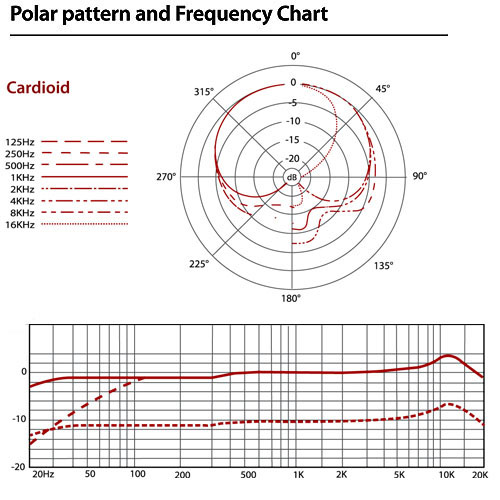
Steve Albini also references the Neumann U67, a large diaphragm condenser microphone. I also don't have access to the Neumann U67, however it appears to be a similar microphone to the SE 2200T as both microphones also seem to have a relatively similar frequency response when referring to the cardioid polar pattern on the Neumann U67.
The Frequency responses for both microphones can be viewed below;
Neumann U67 (Coutant, 2000)

SE 2200T (Scan Computers International Ltd. 2016)
Images of Microphone placements:


